

Autonomy research has raced ahead of the harder problem: physically getting hundreds or thousands of drones into theatre, ready to fly. A new industry piece from Frazer-Nash Consultancy puts a name to that gap — and it’s one ISS Aerospace has been building against for years.
In a piece published this week, Frazer-Nash Consultancy’s Uncrewed Systems team argues that the drone warfare debate has a blind spot. While autonomy algorithms, cooperative behaviours and safety cases have absorbed the bulk of research funding, the discipline of actually fielding a swarm — storing it, moving it, launching it, and keeping it ready — has been left behind.
The evidence is a year old. Operation Spider’s Web, the coordinated strike involving more than 100 systems that reshaped assumptions about Russian aviation vulnerability, wasn’t a triumph of novel autonomy. It succeeded because of how the systems were transported, concealed and launched — engineering discipline applied to logistics, not software.
By contrast, Frazer-Nash notes that most Western trials still operate at the scale of a dozen systems under controlled conditions, often relying on simulation to stand in for genuine mass. That approach can validate software, but it doesn’t expose the real friction points: storage density, power management, platform integration, and rapid launch under time pressure.
THE FIX: LAUNCH INFRASTRUCTURE THAT SCALES
he report’s first recommendation is direct — a concerted push into mass deployment. Retrofit existing aircraft, vehicles and vessels with modular launcher systems. Explore how civilian vehicles and static infrastructure can be adapted to generate mass on demand. Without that layer, autonomy risks becoming a capability with nothing to carry it into the field.
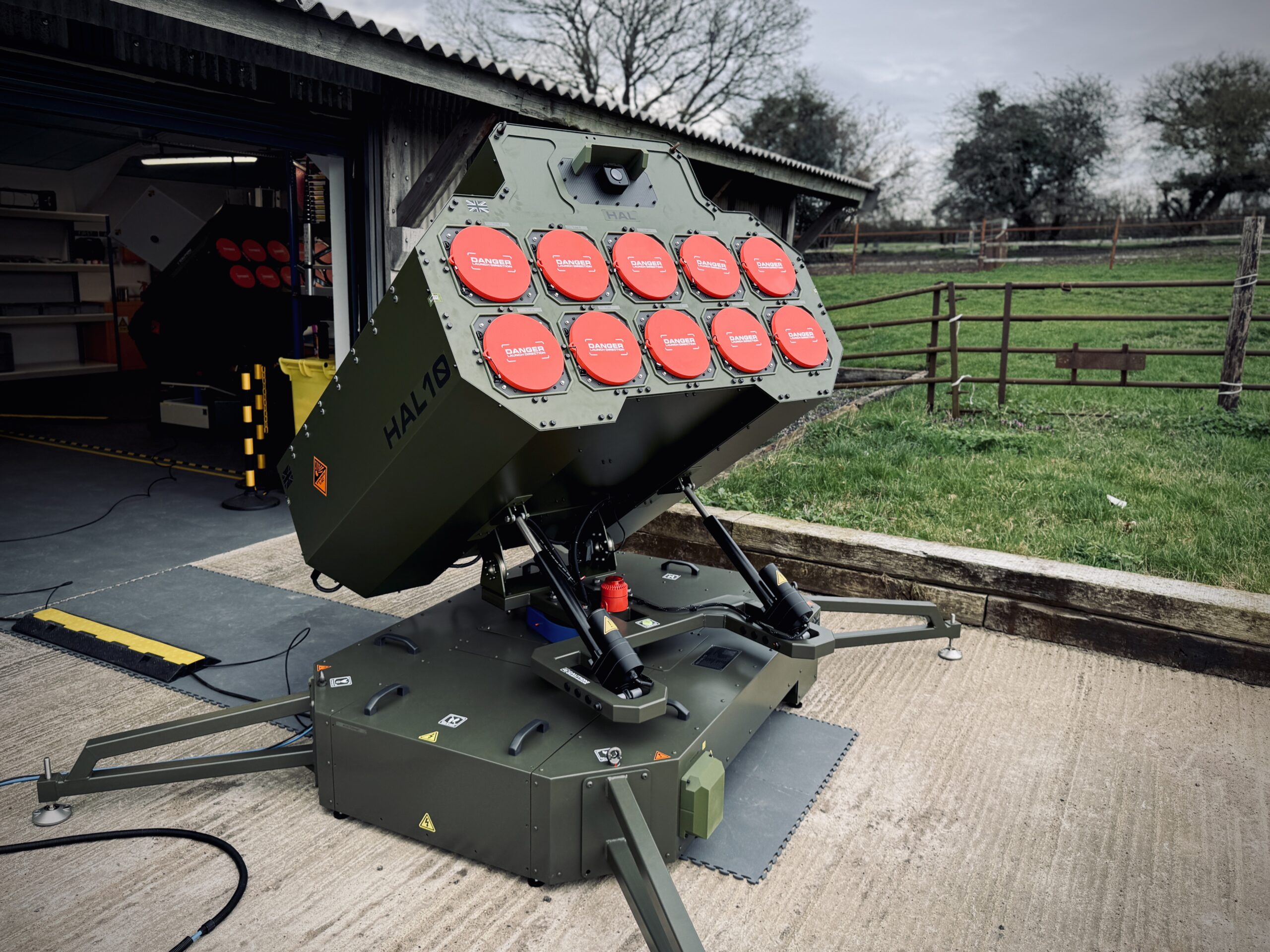
This is the brief HAL10 was designed to meet. Our hybrid air-systems launcher is built as a modular, multi-platform launch capability rather than a bespoke, one-off system — engineered to integrate with existing aircraft, vehicles and vessels and deliver reliable launch at readiness, not just in a demonstration setting.
WHY IT MATTERS FOR PROCUREMENT
The programmes that will win the next phase of uncrewed systems development won’t be the ones with the most sophisticated swarm software. They’ll be the ones that solved storage, transport and launch first — because autonomy without a fielding layer is a fleet management system with no fleet to manage.
HAL10 exists to close exactly that gap: sovereign, modular launch infrastructure, ready to scale from tens to hundreds of systems without reinventing the platform each time.
READ THE ORIGINAL PIECE
Frazer-Nash’s full article, “Fielding the Swarm: The Missing Discipline in Drone Warfare,” sets out three practical interventions — mass deployment, routine experimentation, and a tri-service “Project 300” exercise. It’s a sharp, credible read from a team with a long track record supporting the UK’s swarming R&D programme.
TALK TO US ABOUT HAL10
If your programme is wrestling with the mass deployment problem, we’d like to hear about it.
